Inside AgriBot: From Capstone Project to Field-Tested Robot
AgriBot started as a final-year university project. Here's what it took to turn that into a robot that actually works in a real field.
July 2, 2026 / NYSD Enterprise
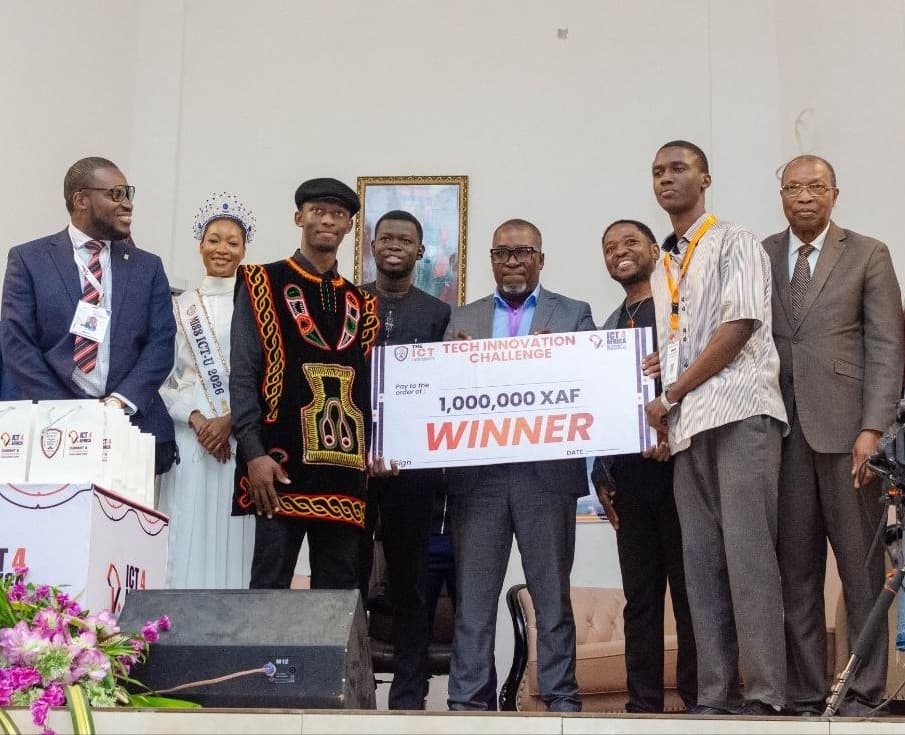
AgriBot began as a final-year capstone project at ICT University in Yaoundé, defended in 2026. At the time of defense, the project had already cleared 9 of 11 planned development milestones, with bench-validated sensor readings and a working prototype. That alone would have been a respectable place to stop.
Instead, it became the starting point.
What "field-tested" actually required
Turning a defended capstone into something you'd trust on a real farm meant closing gaps that don't show up in a university evaluation but matter enormously in practice:
- An on-board edge server. We added an "AGRI-PC" running FastAPI directly on the robot, so it can make decisions and store data without depending on a round-trip to the cloud.
- Live video, properly. WebRTC streaming with OpenCV-based face detection and automatic camera tracking turned a static camera into something that can actually follow what it's looking at, plus digital zoom for closer inspection.
- A real mobile app. Not a demo — a production Android APK built on Expo and React Native, with seven working tabs covering everything from remote driving to AI recommendations to historical analytics.
- Dual online/offline operation. The robot needed to behave sensibly whether or not it had a connection, syncing to Supabase and HiveMQ Cloud whenever one was available.
Being honest about what's not finished
Part of taking this seriously means being upfront about what's still in progress. Live video currently needs a local network connection — a permanent public tunnel is on the roadmap. The Bluetooth Low Energy channel isn't functional yet in the release build, so WiFi and MQTT are doing the work today. Offline map tiles aren't bundled yet, though GPS markers and the robot's trail already work fully offline.
We'd rather list these plainly than pretend the platform is more finished than it is. Engineering credibility, especially for a hardware-and-software product being evaluated by farmers, cooperatives, and investors, comes from precision about what's real today versus what's coming next.
Where it goes from here
The ground robot and mobile app are the proof that this approach works. The next twelve months extend the same rigor to fixed sensor nodes, an aerial drone, and automated actuators — closing the loop from data collection all the way to action, without ever assuming a connection you can't count on.