Why African Agriculture Needs an Offline-First Approach
Most precision-agriculture platforms assume permanent internet. That assumption is exactly why they don't work on the farms that need them most.
June 12, 2026 / NYSD Enterprise
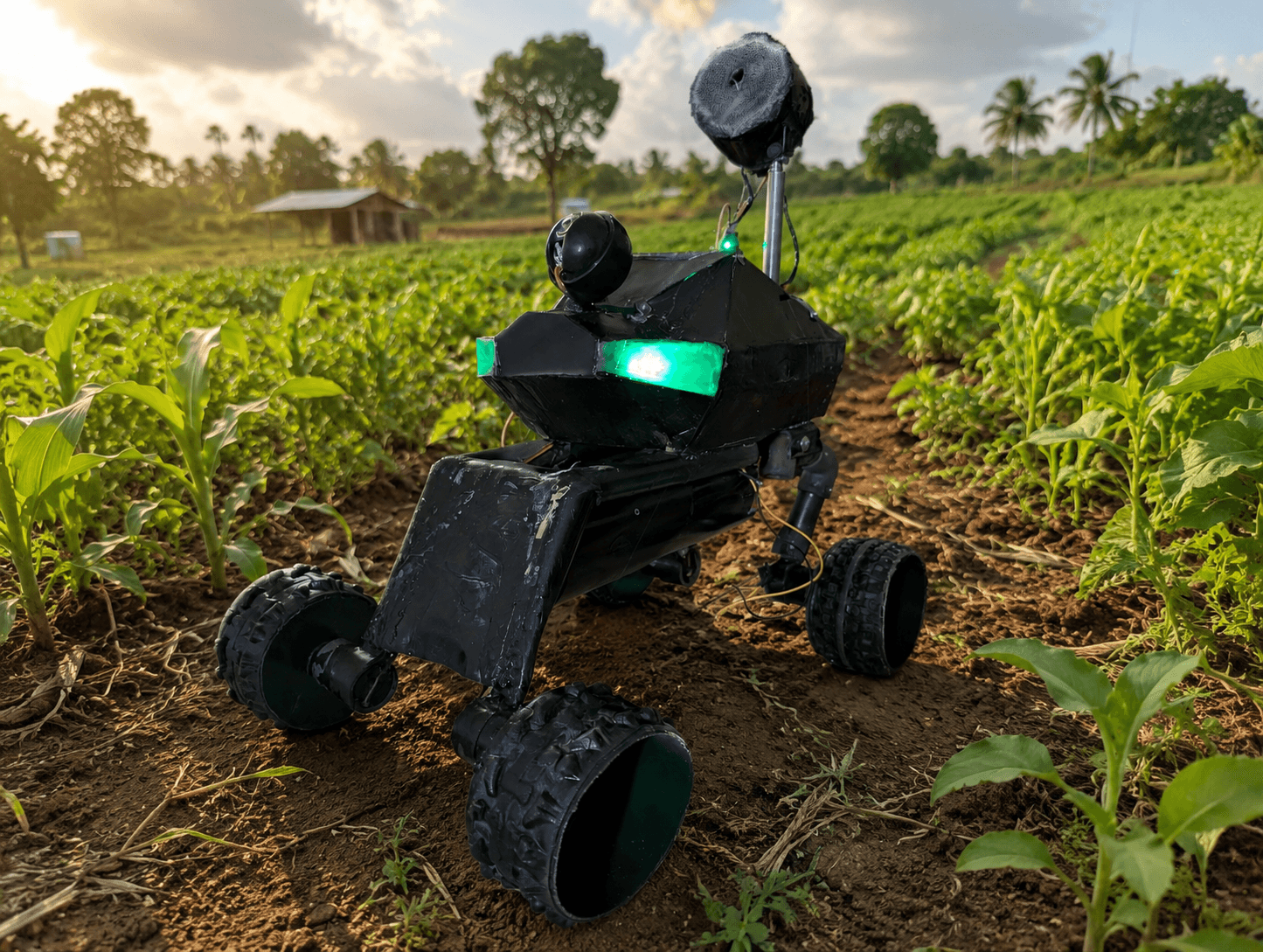
Most precision-agriculture platforms are built on a quiet assumption: that the farm has a permanent, reliable internet connection. For a 500-hectare industrial operation in Iowa or Normandy, that assumption mostly holds. For a 5-hectare cooperative plot outside Yaoundé, it almost never does.
That single assumption is enough to make an otherwise excellent platform unusable — not because the sensors are wrong or the AI is bad, but because the moment connectivity drops, the whole system stops reporting, stops recommending, and stops earning its keep.
Designing for the network you actually have
When we started building AgriBot, we treated intermittent connectivity as the default condition, not the exception. That decision shaped almost everything downstream:
- The robot's on-board edge server buffers sensor readings locally and keeps operating hands-free with no connection at all.
- A local MQTT broker and local PostgreSQL database mean the system doesn't need a round-trip to the cloud to function moment-to-moment.
- Cloud sync happens opportunistically — whenever a connection becomes available, not as a hard requirement to keep running.
The result is a robot that behaves the same way whether it's sitting in a fully connected pilot farm or several kilometers from the nearest reliable signal.
Why this matters more than another feature
Offline-first isn't a checkbox feature — it's a structural decision that determines who your product actually works for. Building it in from day one is slower and harder than assuming connectivity, but it's the only way to build something that works on the farms that make up the vast majority of African agriculture: 2 to 20 hectares, often with patchy or seasonal connectivity, and rarely with an IT department on call.
It's also, we'd argue, a better long-term bet even in well-connected markets. A system that degrades gracefully when the network hiccups is simply more robust than one that doesn't — and every farm eventually has a bad network day.
What's next
Our roadmap extends this same philosophy to the rest of the platform: fixed sensor nodes with a multi-day local buffer, and a drone that acts as a physical "data mule," carrying readings from offline zones back to a point with connectivity. The goal is the same at every layer — the system should keep working even when the network doesn't.